

The Kindest Garden – Materials: How Do I Choose?
Buy less, choose well, make it last.
Vivienne Westwood
The materials we use to build landscapes and structures in them shape our environment. From locally sourced, natural. stone to complex composites, there is a wealth of options for a variety of budgets, aesthetics and performance requirements. The wide range of products and eco claims can make the choice overwhelming, and polarities are too often drawn, suggesting that all concrete or all greenhouse gases are ‘bad’ (where would we be without carbon dioxide, oxygen and H2O?) and all timber is ‘good’, when in fact that depends on how it is grown, used and disposed of.
The best option is to use materials already on site, from recycled paving setts to salvaged concrete aggregate. When it is not feasible to use reclaimed, the next best alternative will depend on several factors besides aesthetics and financial cost: how far the material comes from and how it was manufactured (both in terms of materials and human impact), with some materials still relying on forced or child labour and unsafe work conditions. How easy is it to repair, deconstruct and reuse, and where will it or its components go at end of life? Will it decompose gradually into the land or emit methane in landfill, for example? Is a ‘natural’ product farmed in a biodiversity desert, grown as a monoculture and reliant on fertilisers and pesticides, which pollute watercourses and enter the food chain, or is it contributing to a balanced future in harmony with nature and limiting chemical usage?
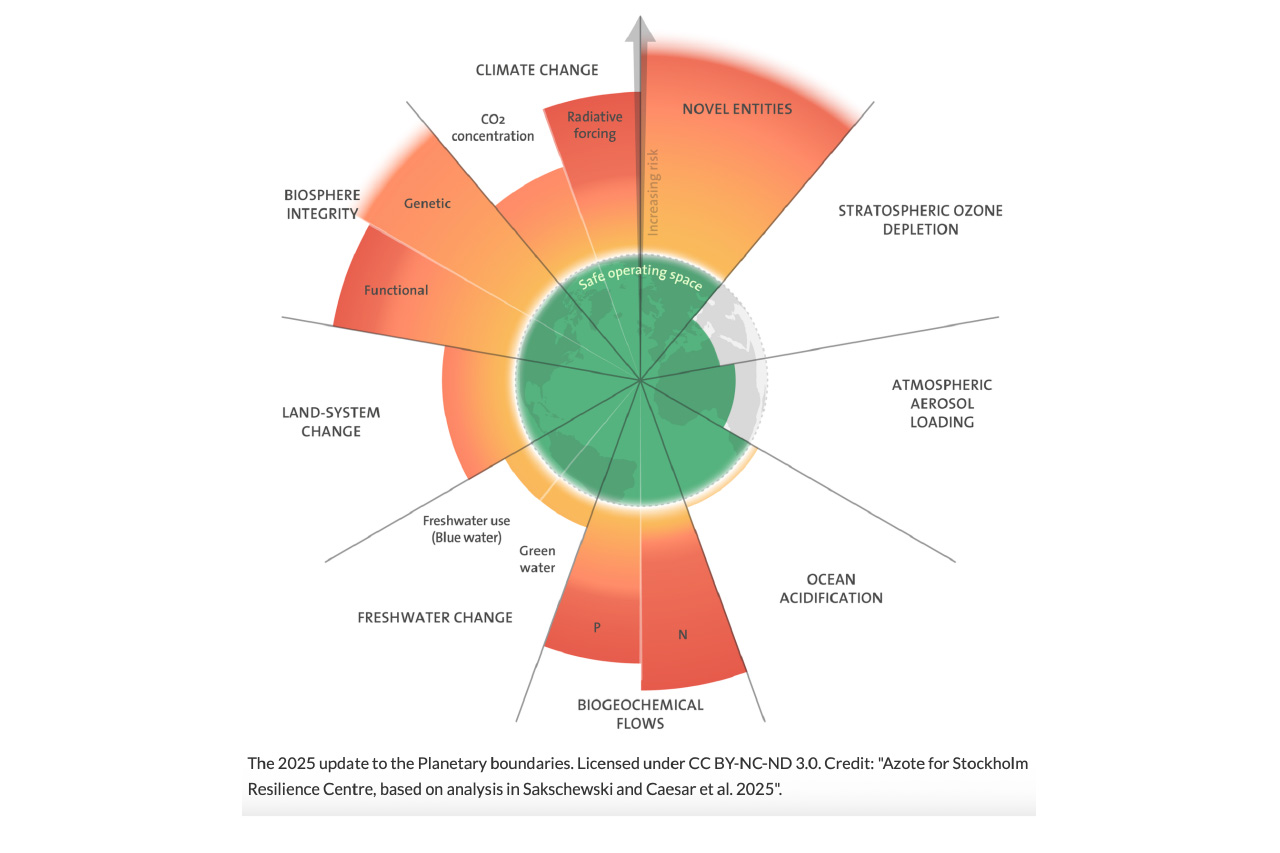
The Planetary Boundaries Framework was created in 2009 by Johan Rockström at the Stockholm Resilience Centre to describe and measure the nine major boundaries within which humanity can continue to thrive for generations to come. It is constantly updated and is a useful framework for decision-making, particularly when choosing materials.
Some key issues to look at include the following:
- Climate impact
- Fresh-water impact
- Biosphere integrity
- Stratospheric ozone depletion
- Atmospheric aerosol loading
- Acidification and eutrophication
Assessing all of these factors is complex, and information on the environmental impact of materials is still patchy. Some suppliers are very transparent, while others have very little publicly available data. In many cases it is necessary to make assumptions grounded in an understanding of the material and its use.
Environmental product declarations (EPDs), where available, are excellent sources of information. An EPD presents the results of a life-cycle assessment (LCA) of a material or product in a standardised format. A range of environmental impacts are reported, from carbon footprint to water use.
An LCA evaluates environmental impacts from raw material extraction to finished product, as well as looking at the ‘usage’ stage and end of life (removal and disposal). It often incorporates a measure of recycling or reuse potential: for example, the carbon emissions offset by reusing rather than re-manufacturing. EPDs are produced following the LCA methodology and are verified by an approved independent verifier before being published.
EPDs can seem overly technical to the nonprofessional, but it is worth downloading them and at least looking at sections A1 to A3, which show the impact of the raw material, transport supply and manufacture of each product and can be used to compare and choose between products. In the table overleaf we have analysed EPDs for some metal, wood, plastic and composite products and illustrated the EPDs in graphic form, adding our own subjective karma rating as a summary. This is a useful process, which I recommend to every design studio and significant user to create a decision-making tool. Some pieces of design software such as Vectorworks and Revit allow data sets to be linked to drawings and have growing databases of the carbon footprint of building materials to integrate in building information modelling (BIM). There are no easily integrated measures of sequestered carbon yet, however, but these will surely come.
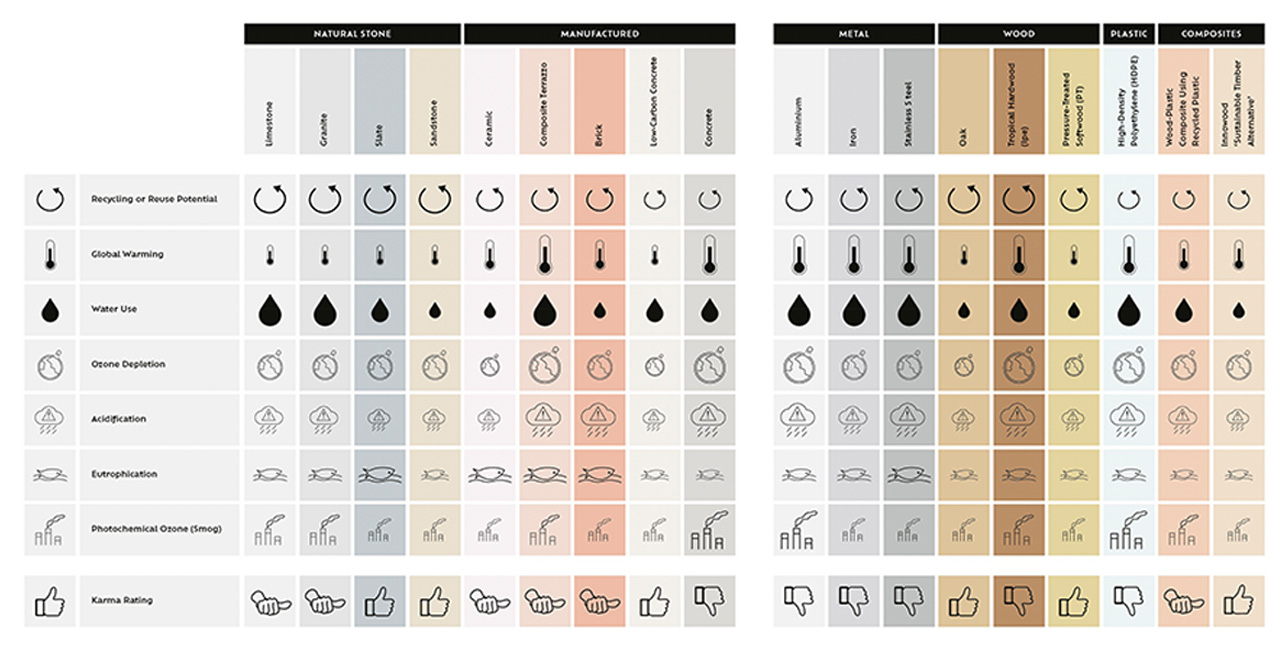
In the table we have analysed EPDs for some metal, wood, plastic and composite products and illustrated the EPDs in graphic form, adding our own subjective karma rating as a summary.

Photo © Jason Ingram. Diagrams © MBLA